
Share this Post
Protecting Your Financial Identity: A Few Simple Steps Worth Taking
We spend a lot of time thinking about how to build wealth. Save more. Invest. Pay down debt. Plan for retirement. But protecting what you’ve already built deserves some attention too.
In 2024 alone, consumers reported losing more than $12.5 billion to fraud.
There’s no way to completely eliminate the risk, but there are some relatively simple steps that can make your financial life a little more secure.
Freeze Your Credit
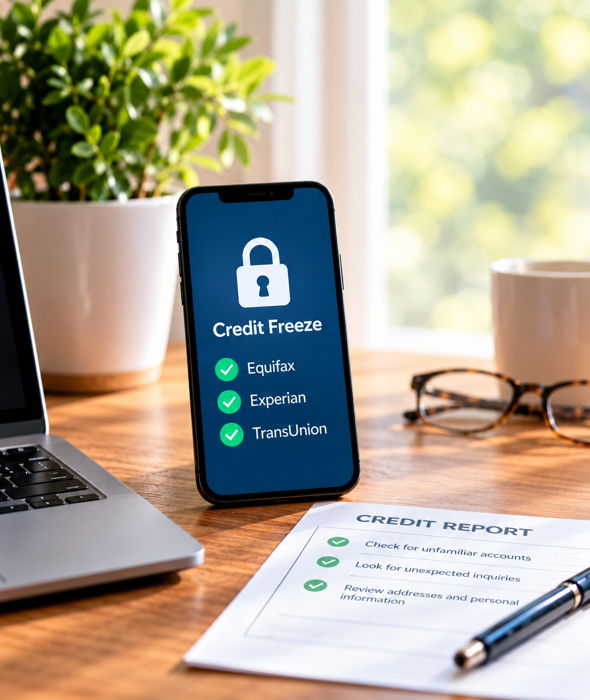
One of the simplest steps to consider is freezing your credit.
A credit freeze restricts access to your credit report. Since lenders generally need to access your credit before opening a new account, a freeze can make it harder for someone to open new credit in your name.
It’s free, doesn’t affect your credit score, and stays in place until you lift it.
To fully freeze your credit, you’ll need to do it separately with all three major credit bureaus:
One quick note: Credit freezes are free. You shouldn’t need to pay for a subscription or ongoing credit-monitoring service just to place a freeze. Be careful as you navigate the credit bureau websites, as it can be easy to accidentally sign up for additional paid services you may not need.
When you legitimately need someone to pull your credit, you can temporarily lift the freeze and have it automatically go back into effect after the time period you choose.
This can be useful if you know a lender will be pulling your credit on a specific day. And if you know which credit bureau they use, you may only need to lift the freeze at that bureau.
Just remember you have the freeze in place the next time someone legitimately needs to access your credit!
Review Your Credit Reports
A freeze helps with new accounts, but it doesn’t mean you can stop paying attention.
Consider reviewing your credit reports at least annually for accounts, inquiries, addresses, or other information you don’t recognize. You can access reports from all three major credit bureaus for free through AnnualCreditReport.com.
Making that review part of your annual financial checklist can be an easy habit to build.
Slow Down Before Sharing Information
Sometimes good financial security is as simple as slowing down.
If someone unexpectedly calls, texts, or emails claiming to be from your bank, credit card company, Social Security, or another financial institution:
- Don’t provide your Social Security number, password, bank information, or other sensitive information.
- Don’t assume caller ID proves who’s calling.
- Never share a one-time verification code.
- Don’t click an unexpected link to “fix” an account problem.
- Don’t give an unexpected caller remote access to your computer or phone.
If your financial institution calls and needs information, there’s nothing wrong with hanging up and calling back using the number on the back of your card, your statement, official app, or the institution’s website.
It can be unsettling to see a suspicious transaction or receive a message saying there’s a problem with your account. That sense of urgency is exactly why it’s important to slow down and verify who you’re dealing with before sharing information or taking action.
Protect Your Online Accounts
Use strong, unique passwords for important accounts and turn on multifactor authentication when available.
Pay particular attention to your email account. If someone gains access to your email, they may also be able to use it to reset passwords for other accounts. And if an email or text says there’s an urgent problem with a financial account, consider going directly to the institution’s app or website instead of clicking the link.
Keep It Simple
Protecting your financial identity doesn’t have to be complicated.
A credit freeze, an occasional review of your credit reports, strong account security, and a little extra caution when something feels off can go a long way.
It’s impossible to eliminate every possible threat. But putting a few safeguards in place can make it less likely that you’ll have to deal with a much bigger problem later.